
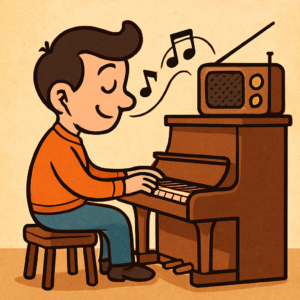
 Learning to play piano by ear is one of the most liberating and rewarding skills a musician can develop. It allows you to sit down at the keyboard and play music without relying on sheet music—just your ears, your intuition, and your understanding of musical patterns. Whether you’re a beginner or an experienced pianist, mastering this skill opens the door to creativity, spontaneity, and musical freedom.
What Does It Mean to Play Piano by Ear?
To play piano by ear means to reproduce music simply by listening to it. Instead of reading notes on a page, you rely on your auditory memory and musical instincts. This skill is especially valuable in genres like jazz piano, where improvisation and interpretation are key.
Playing by ear involves recognizing chord progressions, melodic lines, and rhythmic patterns. Over time, your brain begins to associate certain sounds with specific keys, intervals, and chord patterns. This is how musicians can hear a song once and instantly start playing along.
The Role of Chord Progressions in Playing by Ear
One of the most important elements in learning to play piano by ear is understanding chord progressions. A chord progression is a sequence of chords played in succession, forming the harmonic backbone of a song. For example, consider this classic jazz progression:
Cmaj7 – Amin7 – Fmaj7 – G7
This is known as a I–VI–IV–V chord progression, a staple in both jazz and early rock and roll. Even if you don’t know the theory behind it, you’ve likely heard it countless times. The familiarity of these progressions is what makes playing by ear possible—they become ingrained in your musical memory.
Jazz Piano and Ear Training
In jazz piano, ear training is essential. Jazz musicians often rely on their ears to navigate complex harmonies and spontaneous changes. Recognizing chord patterns like the one above allows pianists to anticipate what’s coming next and respond with appropriate piano voicings and melodic ideas.
Jazz pianists spend years internalizing common progressions, such as the ii–V–I, I–VI–IV–V, and blues progressions. These patterns become second nature, enabling fluid piano improvisation and expressive playing.
The Illusion of Magic—and the Reality of Mastery
To the untrained ear, watching someone play piano by ear can feel like witnessing a musical magician at work. But the illusion stems from a lack of understanding. Once you begin to decode the language of music—recognizing intervals, identifying chord progressions, and understanding how melodies fit over harmonies—the magic transforms into mastery.
Each new concept you grasp peels back another layer of mystery. You start to hear music differently, anticipate changes, and respond instinctively. This progressive realization leads to success at increasingly advanced levels, turning what once seemed impossible into second nature.
Developing Your Musical Memory
To play piano by ear, you need to build your musical memory. This involves:
- Listening actively to songs and identifying recurring patterns
- Singing intervals and melodies to reinforce pitch recognition
- Practicing chord progressions in different keys
- Transcribing music by ear, starting with simple melodies and gradually moving to full arrangements
The more you expose yourself to music, the more your brain will start to recognize and predict musical structures. This is especially true for chord progressions, which often follow predictable patterns.
Piano Voicings and Expression
Once you can identify a progression by ear, the next step is choosing the right piano voicings. Voicings refer to how a chord is played—what notes are included, how they’re spaced, and how they’re voiced across the keyboard. In jazz piano, voicings can be rich, colorful, and full of tension.
For example, instead of playing a plain C major chord, a jazz pianist might use a Cmaj7 with added extensions like the 9th or 13th. These voicings add depth and emotion to your playing, and they’re often chosen instinctively by ear.
Piano Improvisation: The Ultimate Goal
The ability to play piano by ear naturally leads to piano improvisation. Once you can hear a progression and understand its structure, you can begin to create your own melodies over it. Improvisation is about expressing yourself in the moment, using your ears as your guide.
Start by improvising simple melodies over familiar progressions. Use scales that match the chords, experiment with rhythm, and let your ears lead the way. Over time, your improvisations will become more fluid, expressive, and musically satisfying.
Putting It All Together
Here’s how all the pieces connect:
- You listen to a song and recognize the chord progression
- You identify the chord patterns and anticipate the next chords
- You choose appropriate piano voicings to express the harmony
- You use your ears to guide piano improvisation, creating melodies on the spot
This process becomes faster and more intuitive with practice. The more you play by ear, the more confident and creative you’ll become.
Getting Started Today
If you’re ready to play piano by ear, start with these steps:
- Listen to familiar songs and try to play the melody by ear
- Identify common chord progressions and practice them in multiple keys
- Sing intervals and chords to strengthen your pitch recognition
- Experiment with voicings to add color to your playing
- Improvise over simple progressions, letting your ears guide you
Remember, the art of recognizing chord progressions is a major secret of playing piano by ear. And you’ll be doing this much, much sooner than you think!